
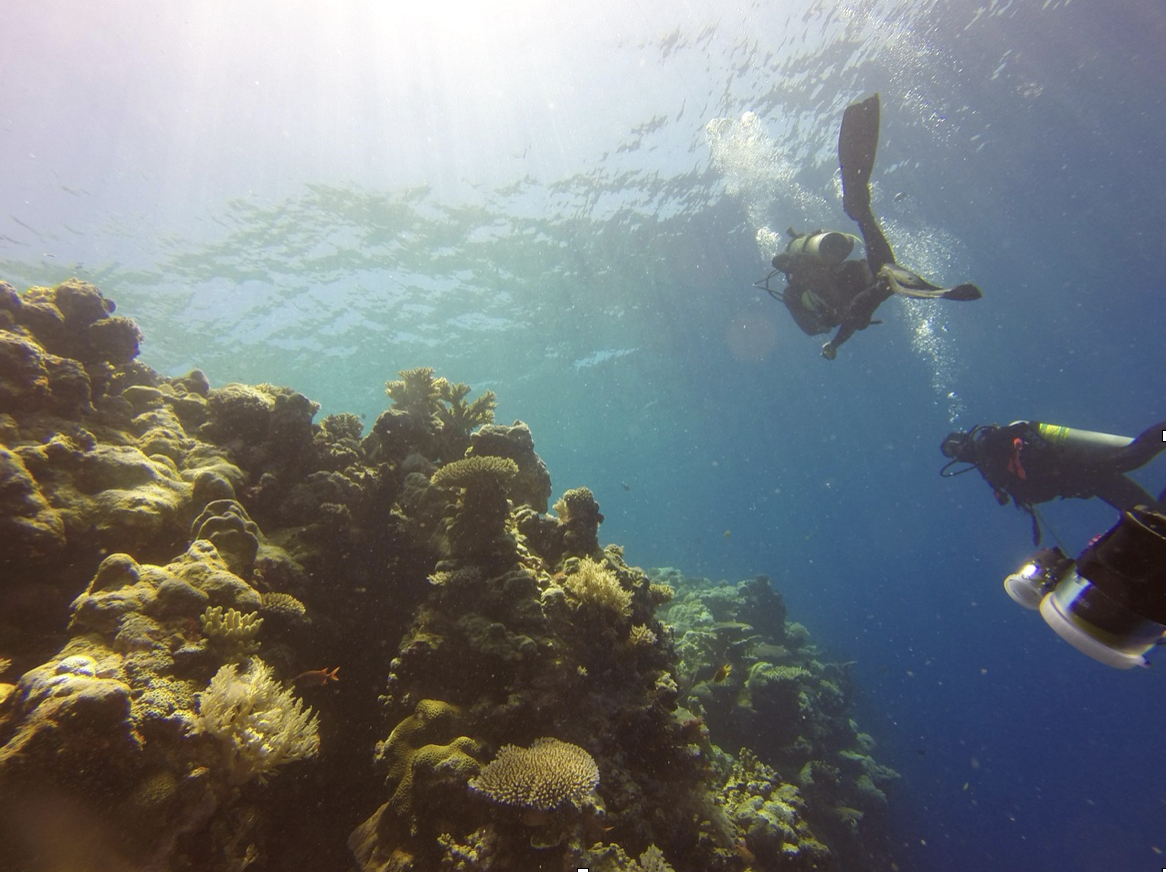
Palau sits in a part of the Pacific where the ocean still feels… properly alive. Not in a dramatic, over-the-top way, but in a steady, almost reassuring rhythm. You drop in, drift along, and at some point—usually sooner than expected—sharks appear. Not one or two. Often dozens.
If you’re planning your first trip here and still figuring things out, what a typical dive trip in Palau looks like can help you understand how to structure your days before choosing specific dive sites.
This guide focuses on five dive sites where shark encounters are not just possible, but likely. More importantly, it looks at what each dive feels like, what it costs to access, and how to make the most of it without overspending.
1. Blue Corner — the classic that still delivers
If Palau had a headline act, this would be it.
Blue Corner is where most divers first experience what Palau is known for—strong currents, dramatic drop-offs, and steady shark traffic. You hook into the reef, settle in, and watch the show unfold in front of you.
Grey reef sharks dominate here. They cruise in loose groups, sometimes circling, sometimes just gliding past with zero interest in you. Add in Napoleon wrasse, barracuda, and the occasional eagle ray, and it becomes more than just a shark dive—it’s a full marine spectacle.
What makes it special
- Reliable shark sightings on most dives
- Close encounters due to current-driven positioning
- A wide-angle experience rather than a chase
What to know before you go
- You’ll need good buoyancy control and comfort in currents
- Reef hooks are standard—your operator will brief you
- Not ideal as a first-ever ocean dive
Cost insight
Most dive operators include Blue Corner in standard dive packages. Expect around $120–$180 per two-tank boat dive, depending on your operator and group size. No premium pricing here, but it’s often the most requested site—so it fills fast.
Smart tip: Book at least two dives here. Conditions vary, and one dive rarely feels like enough.
2. German Channel — where sharks come to be cleaned
German Channel is a bit different. It’s not about drift or adrenaline—it’s about patience.
This man-made channel cuts through the reef and acts as a cleaning station for larger marine life. Manta rays are the headline attraction, but sharks are regular visitors too, especially grey reefs and occasionally blacktips.
You settle near the bottom, keep movement minimal, and wait. Slowly, things begin to happen. Sharks circle in and out of visibility, sometimes coming surprisingly close.
What makes it special
- Calm, observation-based diving
- Sharks interacting naturally at cleaning stations
- Chance to see mantas alongside sharks
What to know before you go
- Requires good discipline—no chasing, no sudden movements
- Visibility can vary slightly compared to outer reef sites
- Photography here is more about timing than movement
Cost insight
Often bundled with other sites like Blue Corner in a single trip. Same general price range. No additional fees unless it’s a private or specialty dive.
Smart tip: Positioning matters. Listen carefully to your guide—they’ll place you where activity is most likely.
3. Ulong Channel — drift diving with hunting sharks
Ulong Channel feels more dynamic. There’s movement, flow, and a sense that something could happen at any moment.
You drift through a wide sandy channel, with coral ridges on either side. Sharks patrol these edges, sometimes moving against the current, sometimes using it to glide effortlessly.
On a good day, you might see multiple species—grey reefs, whitetips, even the occasional larger silhouette further out.
What makes it special
- Sharks in motion rather than circling
- A mix of coral, sand, and open water
- A long, continuous drift—less stop-start diving
What to know before you go
- Timing is everything—this dive depends heavily on current direction
- Not as stationary as Blue Corner; you’ll be moving most of the dive
- Good air consumption helps—you’ll want to stay longer
Cost insight
Usually part of a full-day trip, sometimes slightly pricier due to distance. Expect $140–$200 for a two- or three-dive day.
Smart tip: Ask your operator about current schedules. A well-timed Ulong dive is significantly better than an average one.
4. New Drop Off — quieter, but surprisingly rich
New Drop Off sits a little in the shadow of Blue Corner, but that works in your favour.
Fewer boats, slightly less pressure, and often a more relaxed dive. The wall drops steeply into deep blue water, and sharks tend to cruise along this edge, sometimes appearing suddenly out of the blue.
It doesn’t have the same density as Blue Corner, but when sharks do show up, the encounters feel more personal.
What makes it special
- Less crowded than flagship sites
- Clean, uninterrupted wall diving
- Sharks appearing from open water rather than gathering
What to know before you go
- Less predictable than Blue Corner
- Best combined with nearby sites in a single outing
- Good for divers who prefer quieter dives
Cost insight
No additional cost difference—it’s usually included in standard itineraries. The real value here is experience, not price.
Smart tip: Go early in your trip. If conditions are right, you might end up wanting to repeat it.
5. Siaes Tunnel & Corner — a bit more remote, a bit more wild
Siaes is further out, which already changes the feel of the dive day. Longer boat ride, fewer divers, slightly more commitment.
The site combines a tunnel swim-through with an open corner where sharks tend to gather. The tunnel itself is atmospheric—light filtering through, a bit of drama—but the real draw is outside, where sharks patrol the drop-off.
You’ll often see grey reefs here, sometimes in decent numbers, but without the crowd of divers that Blue Corner attracts.
What makes it special
- More remote, less crowded
- Combination of tunnel diving and shark encounters
- Feels slightly more exploratory
What to know before you go
- Longer travel time—expect a full-day commitment
- Conditions can be a bit more exposed
- Better suited for experienced divers
Cost insight
Trips here can cost more due to fuel and distance. Expect $160–$220 for the day, depending on operator and logistics.
Smart tip: Worth doing once, especially if you’re staying longer than 4–5 days. Not essential for shorter trips, but memorable if you have the time.
Planning your Palau shark diving trip smartly
A quick reality check—Palau is not a budget destination in the traditional sense. Flights, permits, and dive costs add up quickly. But you can still approach it smartly.
Timing matters more than you think
The best conditions generally fall between November and April, when visibility is clearer and currents are more consistent. Shark sightings happen year-round, but conditions can affect how good the experience feels.
If you’re spending this much to get there, it’s worth aligning your dates with the better window.
Permits and extra costs
Palau requires a Rock Islands permit, which is mandatory for most dive sites. Expect around $100–$150, valid for 10 days.
Some operators include it in packages, others don’t. It’s worth checking upfront to avoid surprises.
Choosing the right dive operator
This is one place where going too cheap can backfire.
A good operator in Palau does three things well:
- Times dives based on current and conditions
- Manages groups effectively (smaller is better)
- Knows exact positioning for shark encounters
Saving $20–$30 per dive doesn’t mean much if the experience drops significantly.
How many dive days do you actually need?
If shark encounters are your priority, aim for:
- Minimum: 3 dive days
- Ideal: 4–5 dive days
This gives you enough flexibility to repeat top sites and adjust for conditions.
Final thoughts
Diving in Palau isn’t about ticking off sites. It’s more like watching a live performance—you can return to the same stage, and it never quite plays out the same way twice.
Some dives will feel calm. Others, unexpectedly intense. And then there are those moments where you’re hooked into the reef, current pushing past, sharks moving through the water like they’ve done this a thousand times before… and you realise you’ve stopped checking your gauge altogether.
That’s usually when you know the trip is working.