
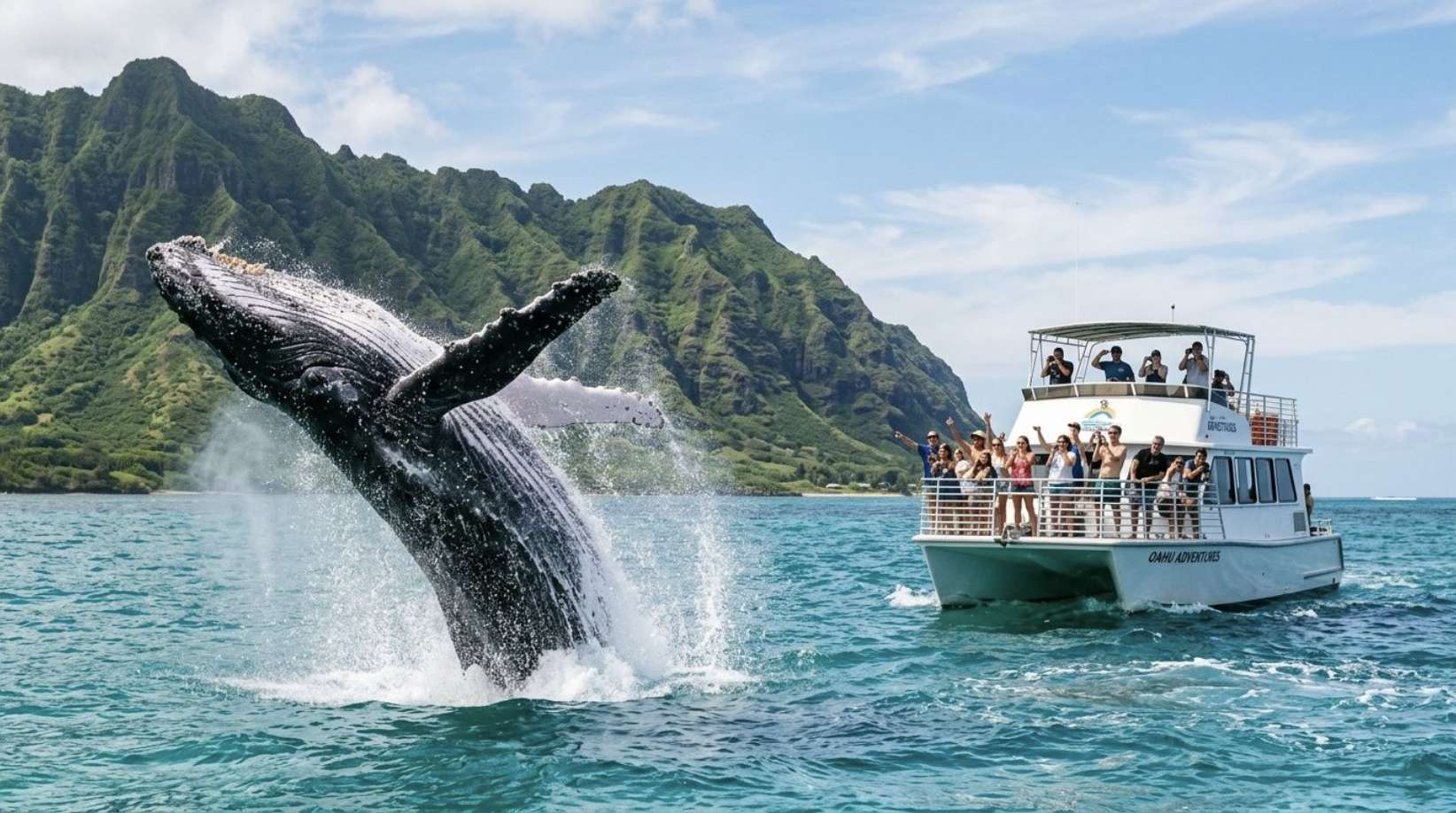
Whale watching is more than just a tourist activity because it helps people learn about marine life, ocean ecosystems, and the importance of wildlife conservation. Watching whales in their natural habitat can create a deeper understanding of how these animals migrate, communicate, and survive in the ocean.
Oahu is the most populated island in Hawaii, known for its iconic coastline, warm Pacific waters, and rich marine life. The island sits in the North Pacific, which serves as a key migration corridor for humpback whales between November and May. Because of its location in the Pacific Ocean, Oahu offers visitors a unique opportunity to witness humpback whales in their natural habitat during migration season.
Joining Oahu whale watching tours gives visitors a front-row view of one of the ocean’s most remarkable natural events. Let’s understand why whale watching is more than just a tourist activity.
It Teaches You How Whales Actually Live
Most people know whales are large. Few understand how complex and structured their lives truly are.
Migration and Navigation
Humpback whales travel up to 3,000 miles each way between their feeding grounds in Alaska and their breeding waters in Hawaii. They do this without landmarks, maps, or technology. Researchers believe they use the Earth’s magnetic field and water temperature to navigate with remarkable precision.
Communication and Social Behavior
- Humpbacks produce sounds that can last up to 20 minutes and travel hundreds of miles underwater.
- Males sing to attract mates, and the songs evolve collectively across the population each season.
- Mothers and calves communicate through quiet calls to stay bonded in open water.
- Breaching and tail slapping are forms of communication that researchers are still working to fully understand.
It Changes How People Think About Conservation
Witnessing the size, movement, and presence of a whale up close makes the threats they face feel real and immediate. Boat strikes, ocean noise pollution, and entanglement in fishing gear are not abstract problems after you have watched a mother and calf swimming together. Many first-time whale watchers leave with a stronger commitment to ocean conservation than they arrived with.
Research consistently shows that wildlife tourism, when managed responsibly, increases public support for marine protection policies. People protect what they feel connected to. Whale watching creates that connection in a direct and lasting way.
What Responsible Whale Watching Looks Like
Not all tours operate the same way, and the difference matters for the animals.
Things To Look For in a Responsible Operator
- Maintains a safe distance from whales as required by federal guidelines.
- Does not pursue or circle whales aggressively.
- Employs naturalists or marine educators on board.
- Limits engine noise and speed near active whale zones.
Choosing operators who follow these standards makes the experience better for both passengers and whales. When looking at Oahu whale watching tours, checking for naturalist-led options is one of the most reliable ways to find a responsible and informative experience.
Things First-Timers Commonly Learn on the Water
- Whales surface far less predictably than most visitors expect.
- Patience becomes part of the experience, not an obstacle to it.
- The ocean itself feels different when you understand what lives beneath it.
- Guides share real-time behavioral observations that no document can replicate.
Steps to Make the Most of Your Experience
- Book a tour with a certified naturalist or marine educator on board.
- Go early in the season, between December and February, for peak activity.
- Dress in layers since ocean conditions can shift quickly, even in Hawaii.
- Bring binoculars to spot distant spouts before the boat gets closer.
- Listen to the guide throughout the trip rather than focusing only on photos.
Key Takeaways
- Whale watching offers real educational value beyond the visual spectacle.
- Humpback whales migrate up to 3,000 miles between Alaska and Hawaii each season.
- Seeing whales in person increases connection to and support for ocean conservation.
- First-time watchers often leave with a deeper understanding of marine behavior.
- Choosing a naturalist-led tour consistently improves the overall experience.