
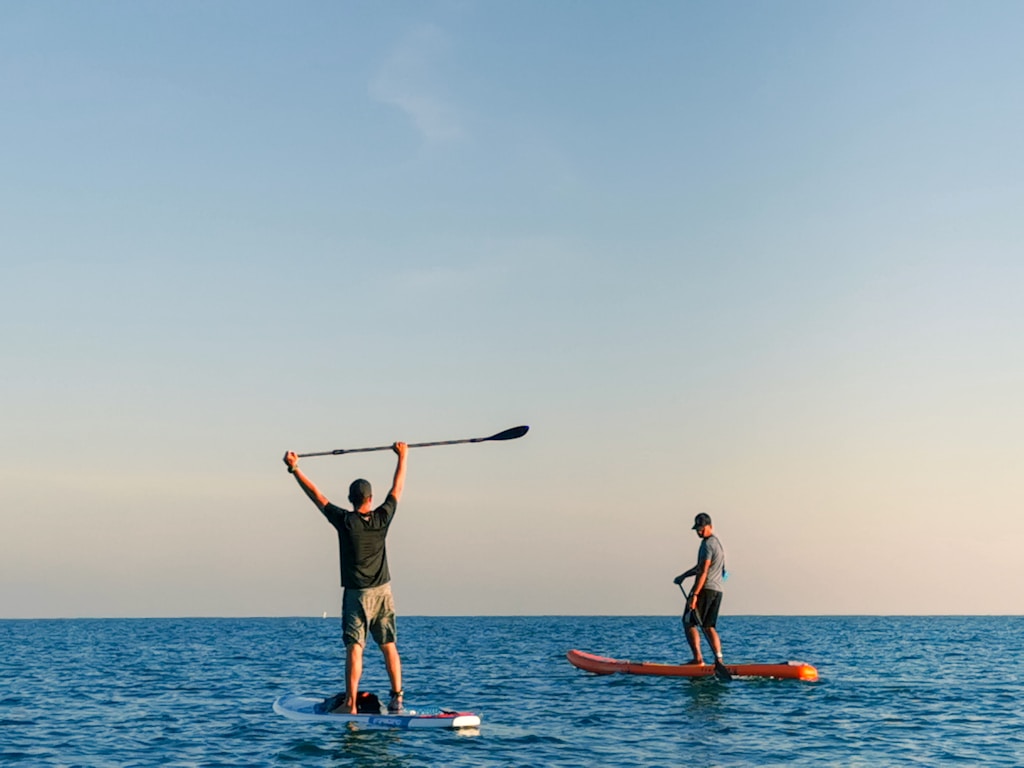
Choosing between the predictable rhythm of an estuary and the raw power of the Atlantic or Indian Oceans dictates your entire gear setup, safety protocol, and technical approach. In the Eastern Cape, particularly along the Sunshine Coast, water sports enthusiasts face a dramatic hydrological contrast. The region features unique micro-tidal lagoons sheltered by massive dune systems, sitting immediately adjacent to high-energy marine environments. Understanding the mechanical differences between these two aquatic playgrounds is the key to maximizing time on the water and avoiding catastrophic gear failure or physical injury.
The Mechanics of Micro-Tidal Lagoons
Micro-tidal lagoons, common around coastal nodes like Port Alfred, are characterized by a tidal range of less than 2 meters. This restricted water exchange creates a highly stable environment where vertical water movement is minimized, drastically reducing the strength of classic rip currents.
[Open Ocean Swell] ---> [Dune Barrier / Sandbar] ---> [Dissipated Energy] ---> [Calm Lagoon Basin]
This transition represents a natural energy filter essential for calm-water recreation. Heavy ocean swells travelling across the Indian Ocean strike the shallow coastal sandbars and towering dune barriers first. This sudden change in bathymetry forces the waves to break prematurely outside the estuary, absorbing and dissipating their destructive kinetic energy. Consequently, the water entering the lagoon basin is stripped of its momentum, leaving a flat, protected surface.
For paddleboarding (SUP), flat-water kayaking, and freestyle windsurfing, this stability is invaluable. The absence of heavy shore breaks allows for immediate launching without the risk of hull damage or paddle loss.
However, micro-tidal systems present specific hidden challenges that require careful navigation:
Shallow Water Tables: Because water volume changes slowly, large sandbanks often sit just 30 to 60 cm below the surface during mid-to-low tide. Utilizing deep fins on a windsurf board or foil masts longer than 60 cm in these zones risks high-speed grounding, which can snap fin boxes and cause forward-momentum injuries.
Wind Shear and Topography: Lagoons in the Eastern Cape are frequently flanked by dense coastal bush or steep dunes. This topography creates a wind-shadow effect. A steady 20-knot ocean breeze can drop to an erratic 8 to 10 knots inside the lagoon basin, causing sudden loss of power for kitesurfers and requiring precise sail pumping to maintain planing.
Water Density and Buoyancy: Due to high evaporation rates and limited ocean flushing, some enclosed lagoons exhibit slightly higher salinity levels than the open sea. This marginally increases board buoyancy, altering how a surfboard or foil sits in the water line and subtly shifting the rider’s center of gravity forward.
Open Ocean Dynamics: The High-Energy Marine Frontier
Stepping off the beach and into the open ocean of the Eastern Cape introduces an entirely different set of hydrodynamic forces. Here, water sports are dictated by the Agulhas Current and powerful Southern Ocean swells that travel thousands of kilometers before hitting the coastline.
The primary obstacle in this environment is the shore break. Unlike the progressive, shallowing slopes of a lagoon, ocean beaches often feature steep longshore troughs where waves break directly onto the sand with immense downward kinetic energy. Crossing this zone requires explosive power and precise timing. Kayakers and surfers must maintain a perpendicular angle to the incoming wave crests to prevent broaching—where a craft is turned sideways and rolled by the whitewater.
| Environmental Factor | Micro-Tidal Lagoon | Open Ocean (Eastern Cape) |
| Average Wave Height | 0.0m – 0.3m (Wind chop only) | 1.5m – 4.0m+ (Swell driven) |
| Primary Current Type | Slow tidal drift (Horizontal) | Powerful Rip currents & Longshore |
| Ideal Equipment Setup | Short fins, high-volume hulls | Long fins, impact vests, leashes |
| Wind Consistency | Gusty, affected by topography | Clean, laminar, unobstructed |
Wind conditions in the open ocean are typically laminar, meaning the air flows smoothly across the flat surface of the sea without being broken up by land features. This makes ocean environments highly predictable for kitesurfing and wing foiling once you clear the surf zone. The trade-off is the presence of longshore currents, which can drift a downwind paddler or kiter up to 2 kilometers per hour parallel to the coast. If you fail to calculate this drift, you can quickly find yourself pulled away from your designated extraction point into rocky, inaccessible headlands.
The Strategic Base Camp
Navigating these dual aquatic environments requires a base camp that offers direct, unhindered access to both hydrological systems without requiring extensive travel with heavy gear.
For travelers looking to exploit these exact dynamics, booking a stay at a premier beachfront resort in Port Alfred provides the ultimate logistical advantage. A prime example is Mpekweni Beach Resort, which is uniquely positioned on an estuary lagoon while sitting steps away from the open ocean beach. This specific layout allows riders to rig a large sail or foil setup on the calm, protected waters of the lagoon to test wind angles, and then immediately transition over the dune line to ride the clean ocean swells once conditions peak. Having a secure staging ground right on the water line eliminates the logistical headache of packing wet gear into vehicles, allowing athletes to adapt instantly to shifting tides and wind directions.
Safety Protocols and Equipment Selection
Transitioning between a lagoon and the ocean requires a complete overhaul of your safety gear. In a micro-tidal lagoon, the primary safety items are footwear—to protect against sharp estuarine rocks or mud prawns—and a standard buoyancy aid. Because land is rarely more than a few hundred meters away, the risk of becoming lost at sea is non-existent.
In stark contrast, ocean deployment demands absolute self-reliance. A heavy-duty, urethane leash is mandatory for surfboards and SUPs; a snapped leash in an ocean current means your flotation device will drift away faster than you can swim.
Furthermore, ocean tracking requires monitoring the local bathymetry. Underwater reefs and sandbars create sudden changes in wave shape, turning a gentle rolling swell into a dangerous plunging breaker within a matter of meters. Before launching into the ocean, spending 15 minutes on an elevated dune to map out the distinct channels where waves do not break—indicating deeper water and potential rip currents—is an essential safety practice that saves both gear and lives.